
A parts order can stall over one missing serial number. On a newly managed yacht, the answer may be buried in a survey PDF or a captain’s photo roll. A useful yacht equipment list puts each component’s identity beside its location and supporting records. That supports correct parts orders and warranty checks, while giving maintenance planning and future handovers a dependable starting point.
Your purchase survey is usually the best place to begin.
Let the survey do the first pass
The purchase survey already lists most of the major equipment aboard, often with make and model information. Use that work to establish the initial inventory instead of starting with a blank spreadsheet.
Treat it as a record of what was aboard when the survey took place. A generator may have been replaced since then, and smaller components may never have been listed individually. Carry the information forward, then confirm it against the boat.
At Harbor Guardian, we turn that first pass into a review rather than a retyping job. Upload the purchase survey to our vessel records, and we propose the vessel’s specifications, locations and components for you to approve.
Organize by location, then component
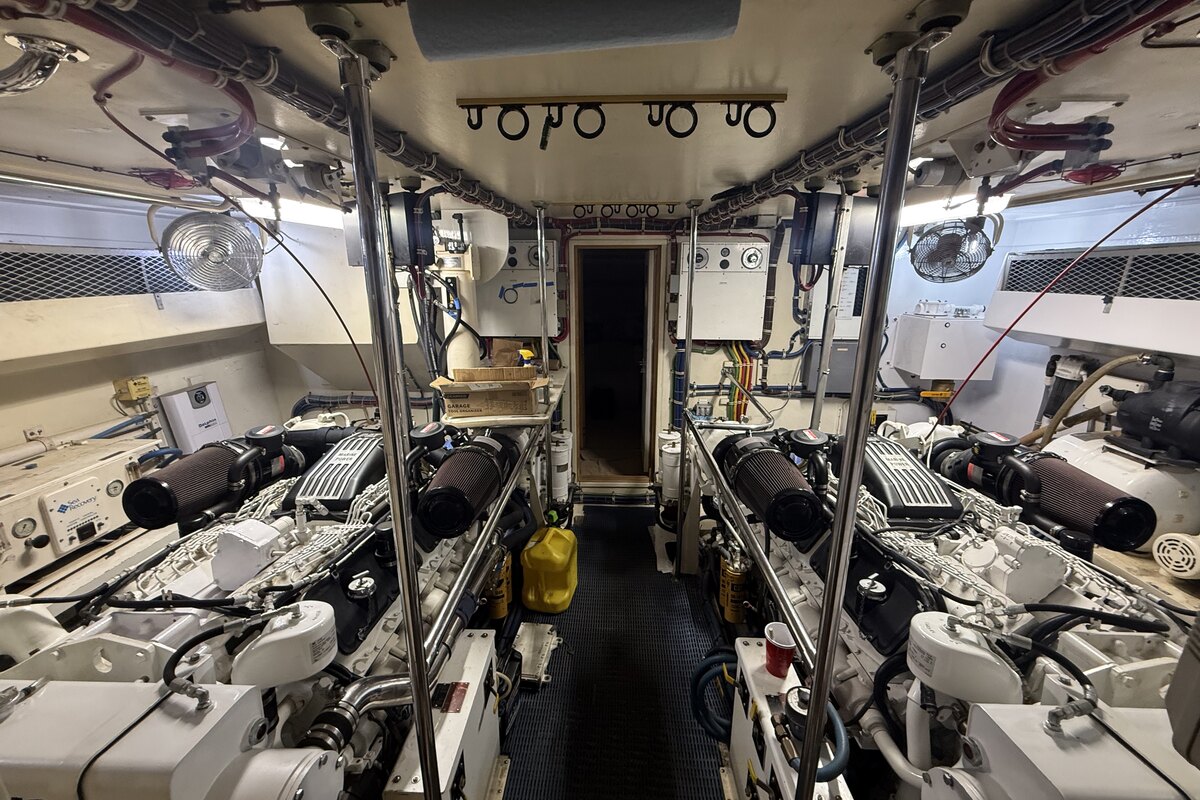
Build the inventory around the way someone walks the boat. Start with spaces such as the engine room and lazarette, then place each component within its actual location.
An entry named Engine room / Port main engine is more useful than a catch-all entry called Engines. Give the starboard engine its own record, even if both share the same model. Their serial numbers and service histories belong to separate units.
Use consistent names for identical equipment. A new captain should be able to distinguish the forward bilge pump from the aft one without calling whoever built the list.
What to record for each item
The useful minimum is enough information to identify the exact unit and support its upkeep:
- Make and full model designation, including any variant or suffix shown on the nameplate.
- Serial number, backed by a clear photo of the identification label.
- Operating hours where applicable, with the date the reading was taken. Keep separate readings for each engine and generator.
- Installation date, supported by an invoice or commissioning record where available. Leave unknown dates unresolved rather than guessing.
- The correct manual for the installed model and, where relevant, serial-number range.
Add warranty dates and supporting purchase paperwork when available. Keep the installation date separate from the date the boat changed ownership.
For maintenance planning, also establish the last documented service. A current hour reading becomes much more useful when you know what work was done at the previous reading.
Walk the boat to fill the gaps
Take the survey-derived list aboard and check it space by space. Confirm that each unit is still installed in the recorded location. Photograph it in place as well as close enough to read its label; the wider view helps someone recognize the correct unit later.
Pay particular attention to equipment added or replaced after the survey, such as a battery charger or watermaker feed pump. Smaller pumps and associated controls may also need their own entries. Note inaccessible or unreadable labels for follow-up.
When you inspect the boat in Harbor Guardian, we use the photos to suggest equipment the paperwork missed. Each component shows the photos it appears in, keeping identification and condition evidence with the right record.
A practical first day on a new boat
Consider a manager taking on a twin-engine yacht with a reasonably complete purchase survey. In the morning, they upload it and approve the proposed layout. An afternoon walk-through confirms the main equipment and catches a replacement battery charger absent from the survey.
They photograph its label and add its manual, leaving a follow-up task for a missing installation invoice. For a boat like this, a usable setup can take a day instead of a week of spreadsheet entry. Outstanding details remain visible as follow-up work rather than becoming guessed entries or forgotten questions.
Keep the list connected to the work
When a pump is replaced, update its identity and installation date, then keep the invoice with the work record. That small habit prevents the inventory from drifting away from what is actually aboard.
In Harbor Guardian, we connect components to their work orders and service history, with hour readings from checklists feeding maintenance schedules. The equipment list stays part of running the boat, ready for the next service visit or handover.
Put your survey to work
The survey sitting in your inbox already holds most of the boat’s equipment list. Harbor Guardian turns it into a vessel record you can approve in an afternoon, then keeps it current with every inspection.
Contact us and we’ll show you how Harbor Guardian would set up the equipment records for your boat or fleet.