

Yacht maintenance tracking without the spreadsheet.
Schedules built from your manufacturers' manuals, next due worked out from your engine hours and the calendar, and a service log that fills in as the paperwork arrives.
Your schedule, read from the manufacturer's manual.
-
01
Upload the manual
The OEM manual for an engine, generator or watermaker.
-
02
Review the rules
Harbor Guardian finds the maintenance schedule and proposes each service with its interval, parts and manual page.
-
03
Approve, adjust or dismiss
A schedule that would take an afternoon of typing is ready to check in minutes.
250 hours or 12 months.Whichever comes first.
Each rule can have an hours interval, a calendar interval, or both. Harbor Guardian works out when each service is next due from when it was last done, using a dated hour history fed by checklists and condition checks.
A maintenance log you can actually read.
Every service and repair is logged against the component: the date, the engine hours, who did it, what it cost and the proof. Service reports and invoices you upload are read and suggested as log entries.
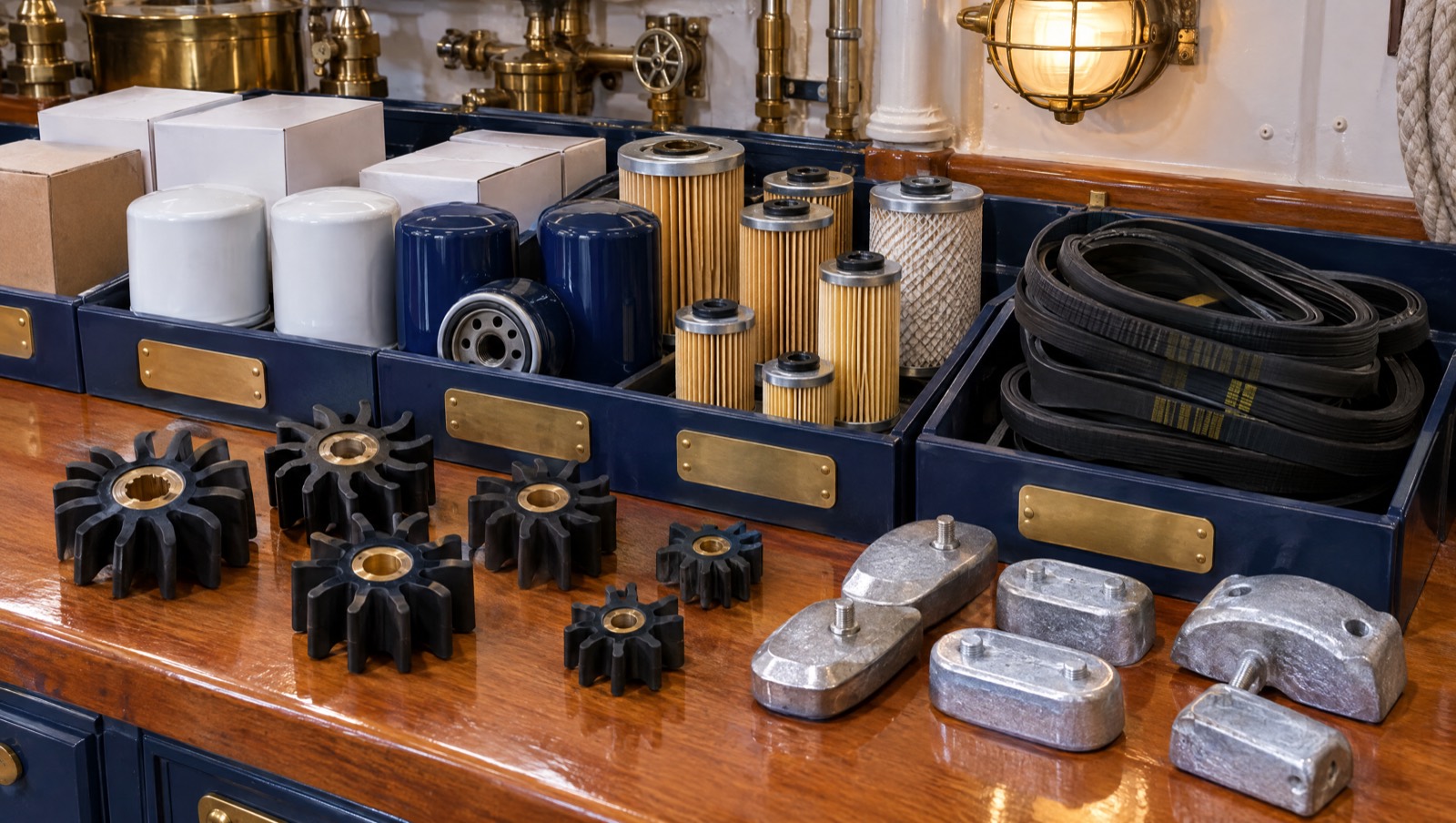
The right parts, on the shelf.
Each service knows the parts it needs, and what's due shows up on the schedule and the dashboard with time to order them.
Spreadsheet vs.schedule.
- Intervals typed in by hand, if anyone has time.
- Next due worked out by whoever remembers.
- Hours copied from a gauge, sometimes.
- Repairs live in a different file.
- Intervals read from the manufacturer's manual.
- Next due worked out automatically.
- Hours fed in from checklists and condition checks.
- Every service and repair in one log.
Yacht maintenance, answered.
Q How often should a raw water impeller be replaced?
Many engine and generator manufacturers call for inspecting the raw water impeller every season and replacing it every one to two years, or at a set number of hours, whichever comes first. Replace it sooner if any vane is cracked, missing or set in a curve. The engine's manual has the exact interval.
Q When should zincs be replaced on a boat?
Replace sacrificial anodes once they're about half consumed, and have them checked every one to three months, more often in warm salt water or near stray current. Anodes that aren't wasting at all may not be bonded properly.
Q How do I track yacht maintenance by engine hours?
Set each service as a rule on its component, due every so many hours, every so many months, or whichever comes first. Harbor Guardian works out when each one is next due and shows what's OK, due soon and overdue.
Q Can Harbor Guardian build a maintenance schedule from my manuals?
Yes. Upload the manufacturer's manual and Harbor Guardian proposes maintenance rules with their intervals and parts, matched to the boat's components, for you to approve, adjust or dismiss.
Q What should a yacht maintenance log record?
For every job: the date, the engine hours, who did it, what it cost, and proof such as the invoice, service report or photos. Logged against the component, that history answers "when was this last done?" and backs up warranty claims.
Read more on this.
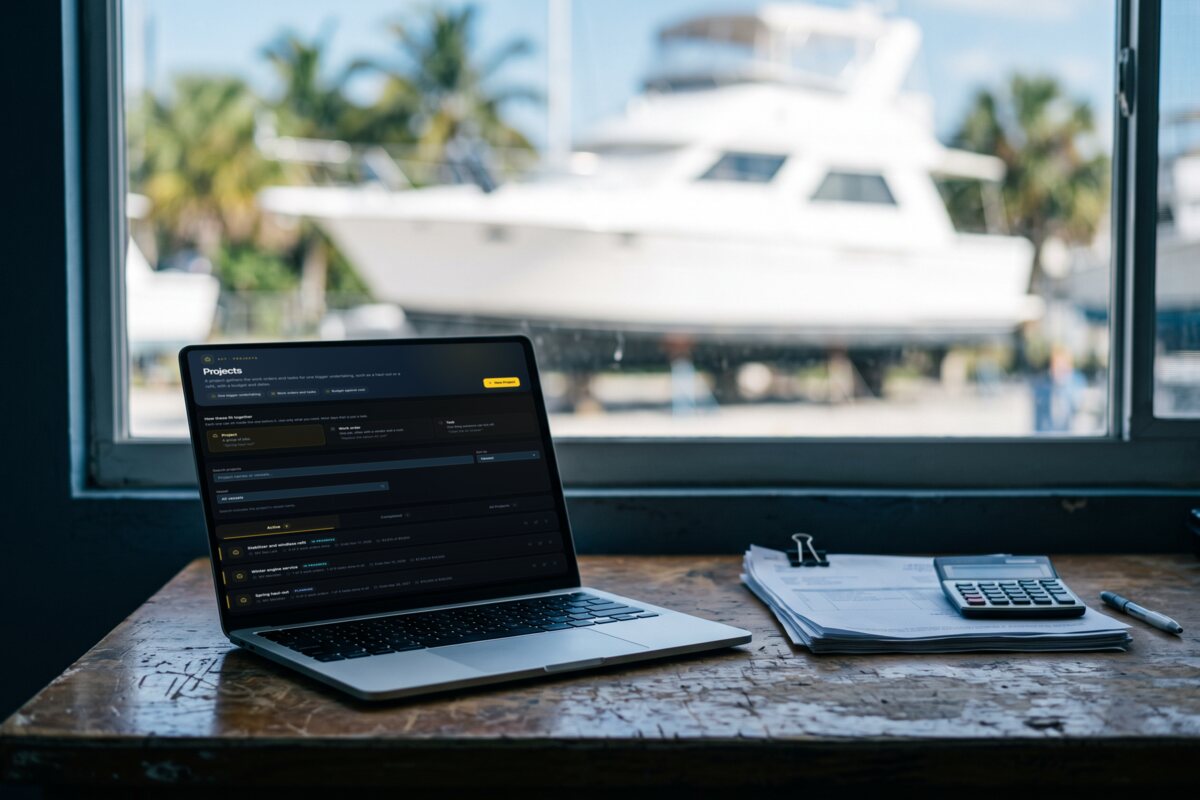
How Much Does Yacht Maintenance Cost Per Year?
Understand the 10% yacht maintenance rule, what drives annual costs, and how service records and timely maintenance help you budget with fewer surprises.
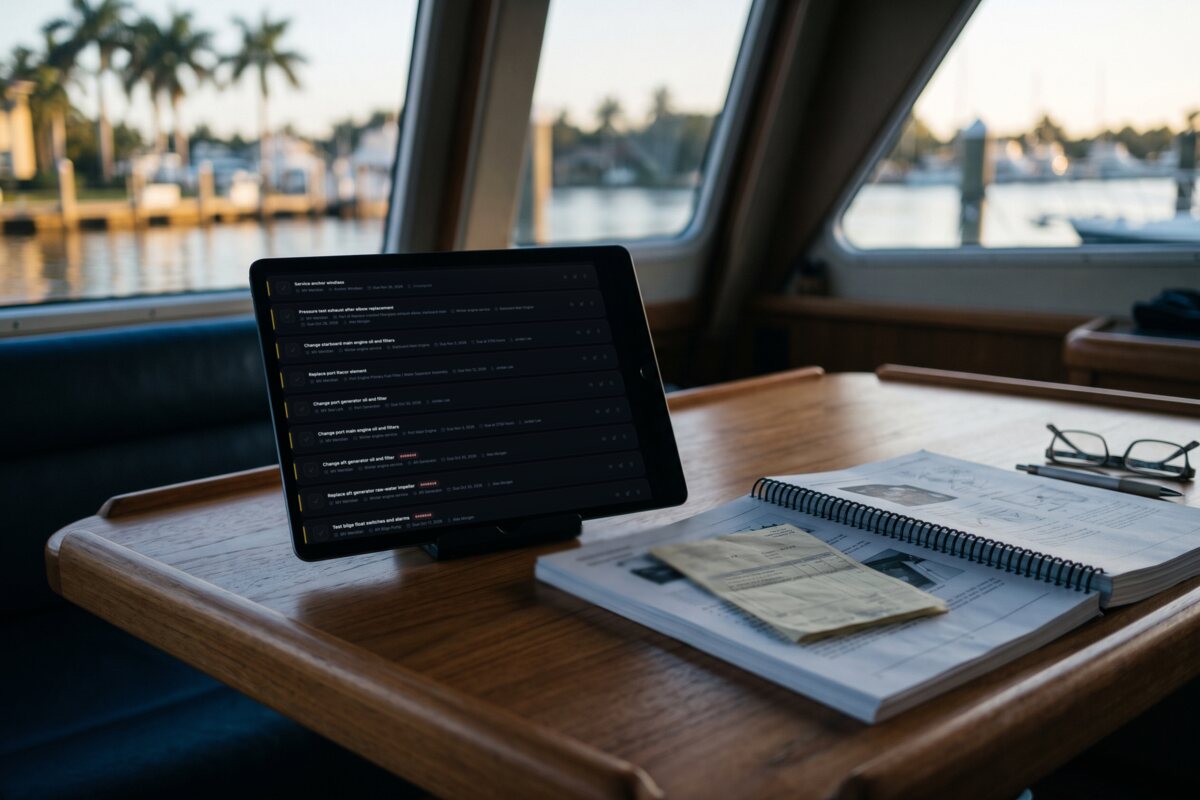
Yacht Maintenance Schedule by Hours and Calendar
A practical guide to hour-based and calendar service, including which systems age while idle and how to track whichever maintenance interval comes first.
Walk through Harbor Guardian with us.
Book a demo and we'll show you the whole loop on a real yacht: an inspection, the findings it raised, and the work that closed them out. Bring your questions about your own boat or the fleet you manage.