
A generator can be well short of its hour-based service interval and still be overdue. On a yacht that doesn’t run much, the calendar often hits the limit before the hour meter does. A good yacht maintenance schedule tracks both, and applies whichever comes first wherever the manufacturer calls for it.
Set the interval for each job
For machinery, the manufacturer’s manual for the exact model is the final word on intervals and what each service includes. Give every service item its own schedule. A single “annual engine service” entry can hide jobs that are due on different cycles.
Every interval also needs a starting point: the date and the meter reading at the last completed service. If that history is missing, write down what you do know and let the technician decide what work to start from. An uncertain date shouldn’t go on the schedule as if it were fact.
What to track by running hours
These jobs run mainly on hours, though many have a calendar limit as well:
- Engine oil and filters usually have an hour-based change interval plus a maximum time between changes. Put both limits on the schedule.
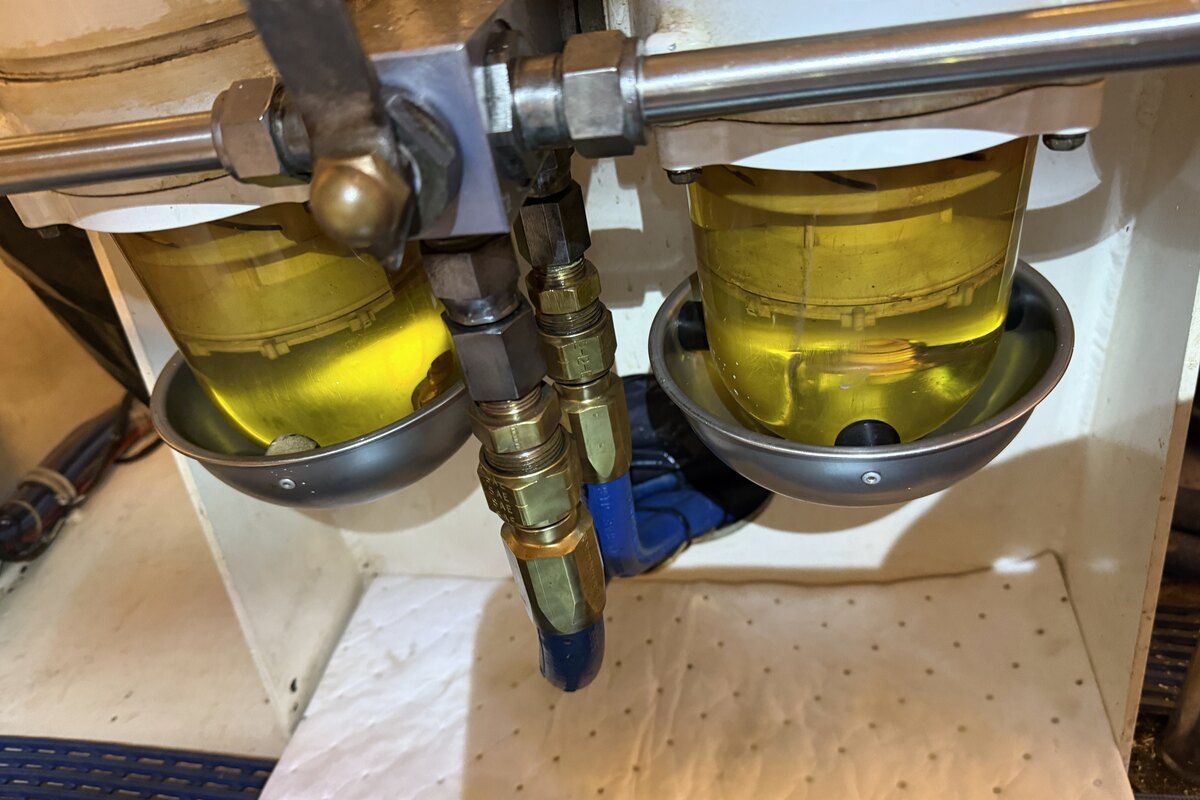
- Fuel filters have set replacement intervals, but a clogged or contaminated filter may need attention sooner. Fuel quality matters as much as the meter reading.
- Belts need inspecting for wear and tension at the intervals in the manual. Add any age-based replacement requirement too.
- Generators need their own schedule and their own meter history. Base their hour-based work on generator hours, never on the main engines’ readings.
An annual service visit is convenient, but a busy season can bring an hour-based job due months before that appointment. Recording meter readings during routine checks keeps the schedule accurate between visits.
What to track by calendar
Raw water pump impellers and hoses age while the boat sits, as well as when it runs. Follow their calendar inspection and replacement intervals alongside any hour limits. If you find cracks or leaks, deal with them before the next planned service, however little the boat has run.
Coolant wears out too. Its protective additives break down even in an engine with few hours on it. Use the specified coolant type and follow its testing or replacement schedule, even if the boat has hardly moved.
Sacrificial anodes, usually called zincs, get used up while a yacht sits in the water. Set calendar inspection points and replace them based on their condition and the equipment guidance. A fixed annual replacement date can miss anodes that are going faster than expected, and what you find at each inspection tells you how often to check.
Fire extinguishers and life rafts run on calendar inspection and service requirements, with no connection to engine hours. Set those dates from the equipment instructions and any rules that apply to your boat, and keep the current service records.
Whichever comes first, in practice
Say a generator’s manual calls for an oil and filter change every 250 running hours or 12 months, whichever comes first. It was last serviced at 800 hours, so the next hour-based limit is 1,050.
Now the meter reads 910 hours, and 13 months have passed. The generator has used only 110 of its 250 hours, but the service is a month overdue, because the calendar limit came first.
A spreadsheet that tracks only hours would show this job comfortably ahead of schedule. And if the last service invoice is buried in email, the elapsed months are easy to miss.
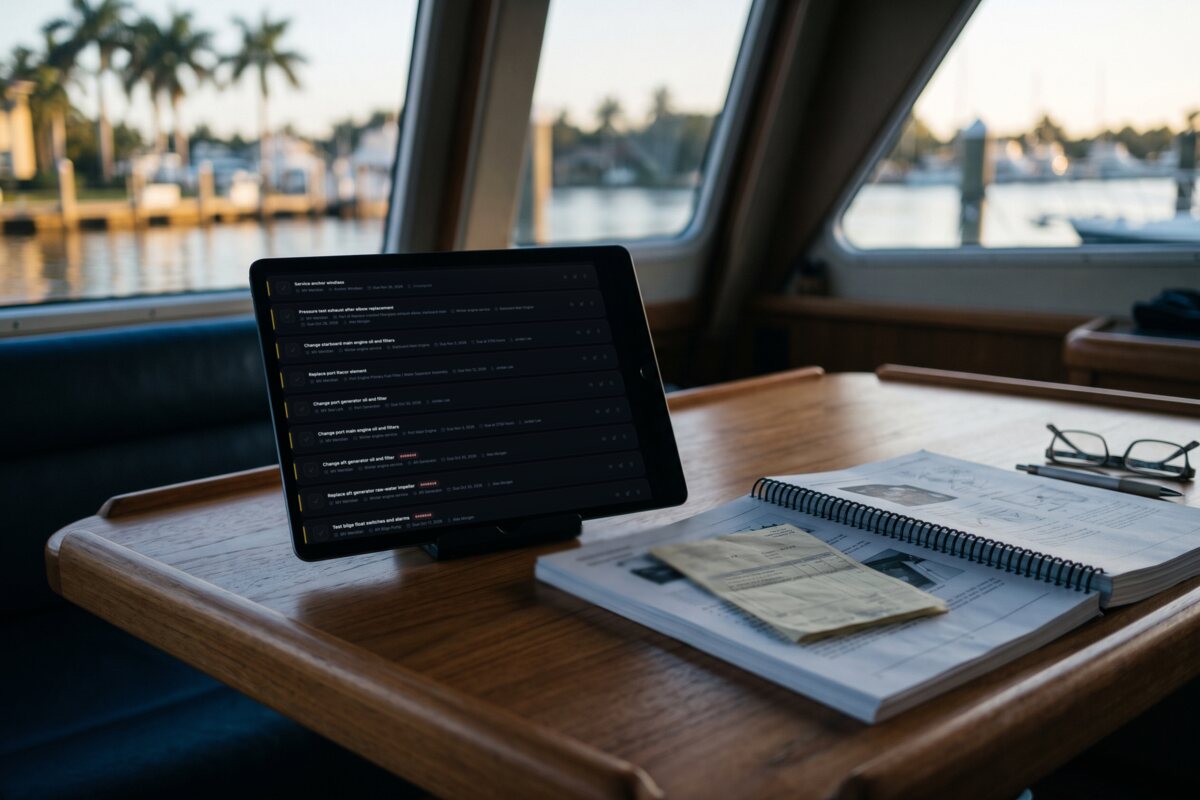
Harbor Guardian builds your yacht maintenance schedule from the manufacturer’s manuals, with intervals by hours, by months or whichever comes first. It works out the next due point from the last service and the hour-meter history. In the schedule view, the generator above shows as overdue on its calendar interval, even with hours still left.
The same view shows what’s OK and what’s due soon, so you can tell upcoming work from jobs that are already past their limits. You can create a task or work order straight from the schedule, without copying the details into a separate to-do list.
When the work is done, the service log records the actual completion date and meter reading, who did the work, what it cost and the proof. That gives the next interval a documented starting point. A booked appointment still counts as outstanding until the service is done and recorded.
Stop tracking intervals by memory
Hours, months and whichever comes first is a lot to keep track of in your head or a spreadsheet once you have two engines, a generator and a dozen calendar items. Harbor Guardian works out what’s due and keeps the proof once it’s done.
Contact us and we’ll show you how your maintenance schedule would look in Harbor Guardian, on one boat or across a fleet.