
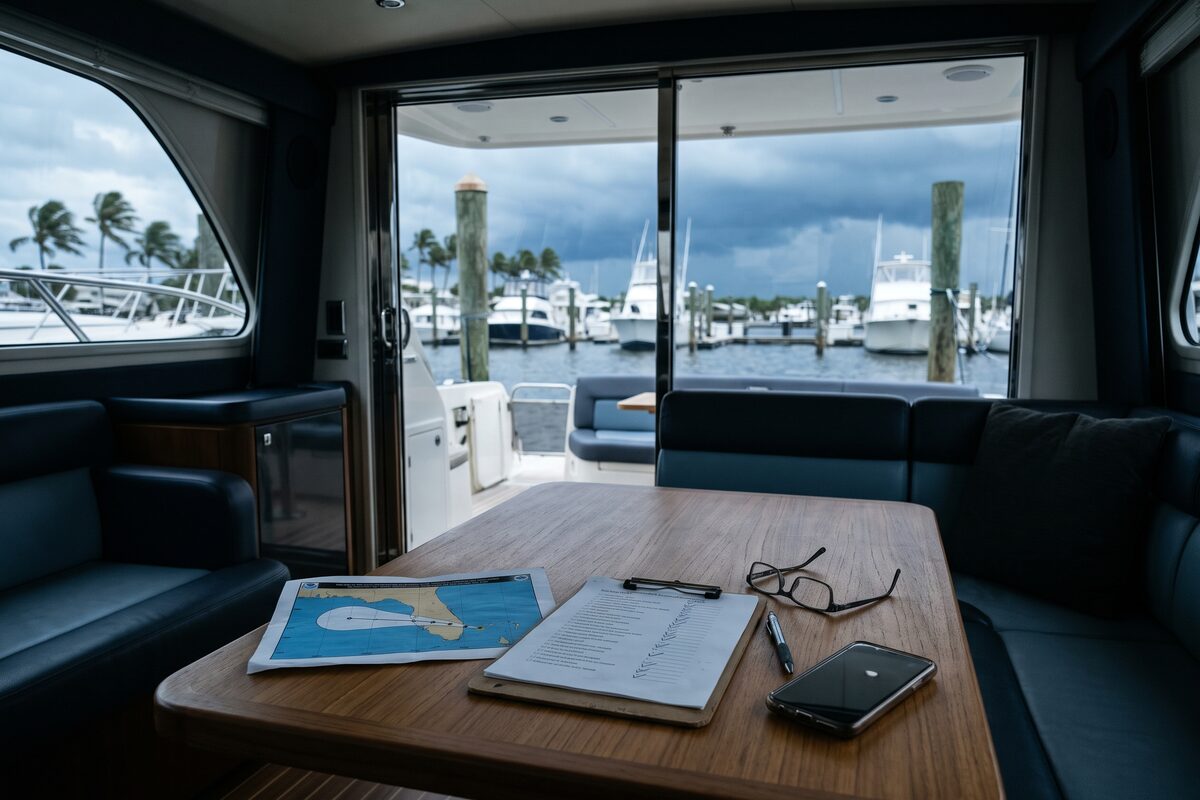
When a storm turns toward your marina, the boats that come through best are the ones whose plan was decided, written down and assigned before the forecast cone narrowed. Decide where the yacht will be secured before the yard fills or the safe route out closes, and build your hurricane prep checklist with enough time for the work and for everyone to get ashore.
Count these checkpoints back from expected unsafe conditions at your location, not landfall. Forecast changes and local evacuation orders take priority. Haul-out reservations and relocation options belong in your preseason plan; 72 hours out is the time to activate it.
72 hours out
Confirm the destination and a firm cutoff for completing the move.
- Haul out if that is your agreed plan and the yard can take the boat. Confirm its arrival deadline and arrangements for blocking and securing the yacht ashore.
- Relocate only while the route and destination are safe. Check bridge restrictions and port closures, and leave a weather margin for delays.
- Stay afloat only where the berth or mooring is suitable for forecast surge and wind exposure. Confirm the marina’s storm requirements and the strength of attachment points.
Keep your insurance policy and claims contacts accessible off the boat. Include registration and recent service records in that off-boat copy, and check policy requirements for named storms. In Harbor Guardian, the policy, registration and service records already live with the vessel, so nobody is digging through email for them with a storm two days out.
Assign each preparation task to a person with a completion deadline. “The captain is handling it” leaves too much room for assumptions across a fleet or a shared crew.
48 hours out
Finish the labor-intensive work while supplies and help are still available.
- Set storm lines for predicted water-level changes without allowing the boat to strike the dock or neighboring yachts. Add lines where the mooring plan calls for them. Use sound attachment points and secure chafe gear so it stays at each contact point.
- Remove canvas and loose deck gear. Secure tenders and equipment that cannot be stowed below using suitable attachment points, rather than relying on light covers or casual lashings.
- Take on fuel for any planned relocation and anticipated generator use, leaving expansion space. Replenish fresh water for the recovery period before dock services become unavailable.
- Test automatic bilge-pump switches and manual operation, and clear accessible pump strainers. Confirm batteries are charged and serviceable, then verify the pumps work on battery power.
With our yacht checklists, you can build a reusable hurricane-prep list in Harbor Guardian. Crew run it on a phone, attaching proof photos as they go. A photo showing chafe gear at the fairlead gives the manager something specific to review; a group text saying “lines done” leaves more questions.
24 hours out
Complete the final visit while access is dry and safe.
- Shut down and disconnect shore power using the boat’s procedure. Stow the cords and leave automatic bilge circuits powered under the vessel’s storm shutdown plan.
- Secure hatches and exterior doors. Keep escape routes clear until everyone is off, then leave before conditions deteriorate. Do not remain aboard to tend lines through the storm.
Record the boat’s condition before departure. Photograph the hull and deck, then work space by space through machinery areas and the interior. Capture existing damage as well as the finished storm setup. Dated photos provide evidence of pre-storm condition for an insurance claim and a baseline for the return inspection.
On a 55-foot motor yacht, that might include close views of the aft-cabin portlights and surrounding headliner, along with the final stern-line setup. Wide shots establish location; close views preserve detail.
In Harbor Guardian, we keep those pre-storm inspection photos in the yacht’s dated history. The completed checklist records preparation, while the inspection records condition.
After the storm passes
Return only when authorities and the marina permit access. Check for damaged docks and electrical hazards before boarding. Have a qualified marine technician assess wet electrical equipment or machinery with suspected water intrusion before energizing or starting it.
Photograph damage before cleanup where safe, without delaying urgent measures to prevent further loss. Notify the insurer promptly and follow its claims instructions. Keep receipts for emergency protection and repairs.
Repeat the space-by-space inspection, using the earlier photos for comparison. On that motor yacht, new staining beneath an aft-cabin portlight can become a finding linked to its location and photos. You confirm the finding, then create a work order to trace and repair the leak.
In Harbor Guardian, we keep that finding connected to the work order and repair evidence through verification. The manager can follow the issue from discovery to checked repair without reconstructing it from a photo roll and vendor messages.
Put your hurricane plan on record
Hurricane season rewards the boats with a plan, a checklist someone actually ran, and photos that prove the condition before and after. Harbor Guardian keeps all three in one place for every boat you look after.
Contact us and we’ll show you how Harbor Guardian would handle hurricane preparation and post-storm follow-up on your boat or across your fleet.