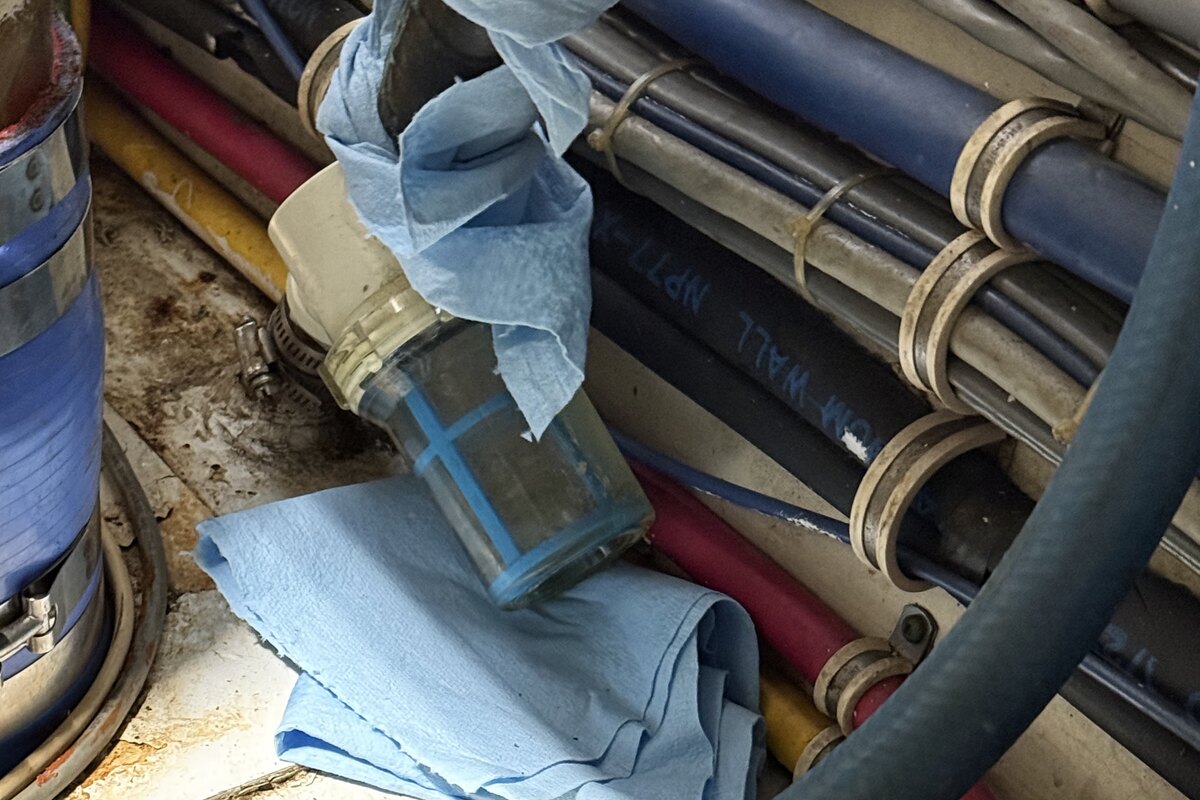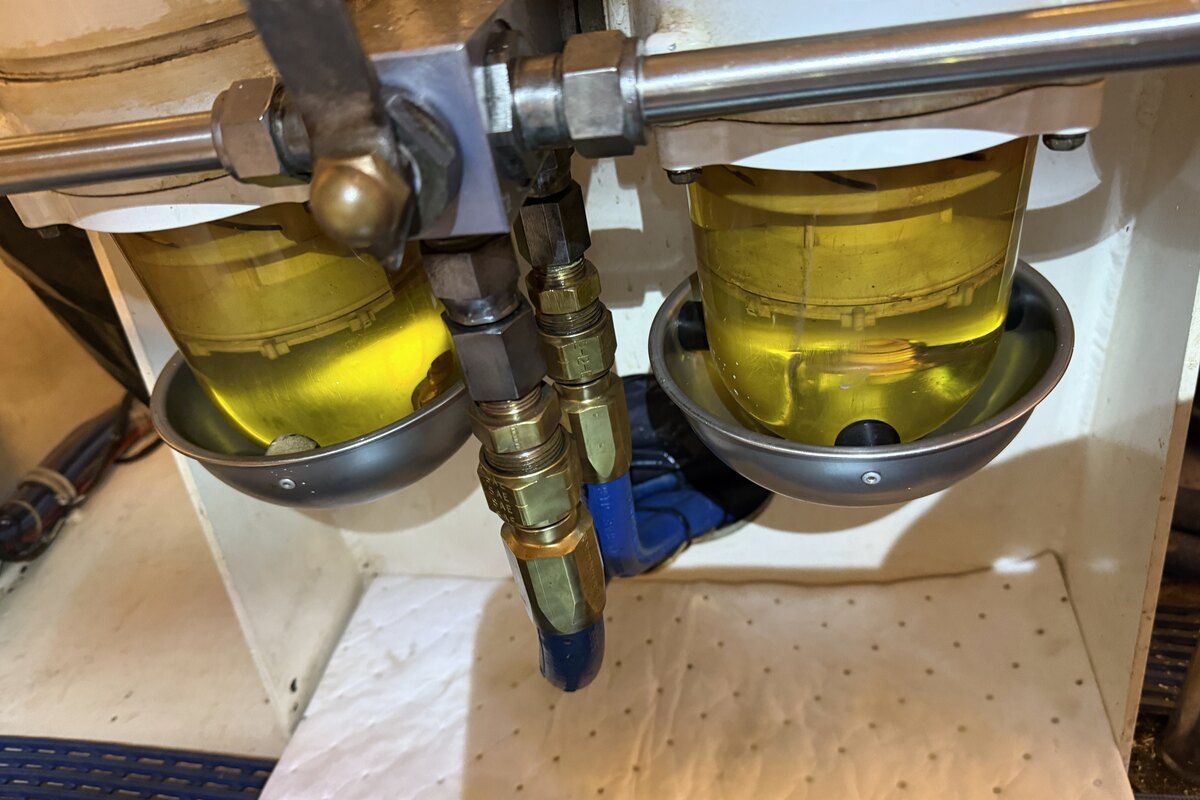


The most common warning signs of a marine generator problem are new or increasing soot at the exhaust, less raw water coming out with it, coolant stains that keep spreading, black belt dust under a pulley, new vibration, harder starting, and running hours creeping past the last service. Each one is easier to judge when you can compare it with photos and readings from earlier visits.
Most generator problems leave that kind of trail before the set quits. The hard part is noticing the change when each visit only gives you a snapshot. Repeat observations of the same generator, tied to its running hours, put those small warning signs in context.
Take close-up photos with the generator stopped and cool. Note operating observations separately, including the load and any change in how it starts or vibrates.
What do more soot or less exhaust water mean?
New or increasing soot means it’s time to look at loading and combustion. Long stretches of light-load running can cause it, and so can restricted intake air or injector problems. Oily carbon deposits can mean wet stacking, where unburned fuel builds up in the exhaust. Water at a wet-exhaust outlet is normal, but oily residue needs assessing. If soot or residue persists, have a technician look at it. Don’t try to burn it off with an improvised high-load run.
Less raw water coming out of the exhaust deserves prompt attention. Compare it with the boat’s normal discharge under similar conditions, allowing for any water separator. A restricted intake or a clogged strainer may be the cause, and a damaged impeller or an air leak on the suction side are other possibilities. If cooling water flow stops or the generator overheats, shut it down as the manual describes.
If there’s an exhaust leak or a carbon monoxide alarm, get everyone into fresh air and shut the generator down, without going into a space that isn’t safe. Make sure the boat’s carbon monoxide alarms work. ABYC standard A-24 covers carbon monoxide detection on boats, and U.S. Coast Guard boating safety guidance names generator exhaust as a common source of carbon monoxide aboard.
How can you tell an active leak or a worn belt from old residue?
A dry coolant trail may just be an old spill. Fresh dampness, or crust that keeps spreading around a hose joint or pump seal, suggests an active leak. Have it checked before the next run, especially if the coolant level is dropping. Shut down for overheating or rapid coolant loss. A photo can show the leak is getting worse, but finding its source still takes a diagnosis.
Black dust under a pulley can point to a slipping or misaligned belt. If the dust is building up or the belt looks frayed, have it inspected before the next run. Photographing the same pulley area over time helps tell old residue from wear that’s still happening.
Rust staining around the mounts may just be moisture, while fretting dust or disturbed paint can mean the generator is moving on its mounts. Compare those marks with any change in vibration. New vibration needs a prompt look at the mounts and fasteners, and a sudden, severe change means stopping the set.
What do hard starting and rising hours tell you?
Longer cranking or repeated start attempts can point to weak batteries or resistance at the cable connections. Fuel delivery problems are another possibility. Note whether it happens cold or after the generator has been running, and have it diagnosed before you count on the generator for the next trip. Stay within the manufacturer’s cranking limits. Repeatedly forcing a start can make things worse.
Rising hours are a warning even when the generator sounds fine. Compare the current reading with the last documented service, not a date someone remembers. A busy stretch can bring maintenance due well before a seasonal visit. Follow the intervals in the generator manufacturer’s operation and maintenance manual, and where a service has both an hour and a calendar limit, whichever comes first applies.
How do you track generator warning signs over time?
Harbor Guardian’s equipment condition checks use a few photos to report the generator’s condition and what’s changed since earlier photos. They also read the running hours from the hour meter and the serial number from the data plate. Shooting from the same angles each time makes the comparisons more useful, especially around hose connections and under pumps.
Say a generator has a dry coolant stain under a hose connection. Over three months, repeat photos show the stain spreading, then fresh dampness. With separate camera rolls and group texts, someone has to piece that history back together. Kept against the same generator, the photos show the progression and give the technician a head start.
Once you’ve reviewed and confirmed the change, the finding can become a linked work order for diagnosis. The technician’s repair paperwork stays with the job. A follow-up check confirms the repair worked and keeps the proof, so the issue is closed on evidence, with the invoice as just one part of it.
Harbor Guardian works out upcoming maintenance from the last service and the hour-meter history, so current readings also show what’s due soon or overdue. The spreading stain and the approaching service interval sit in the same vessel record, where nobody has to remember to follow up.
Quick answers
Is water from a generator’s wet exhaust normal? Yes. Water at a wet-exhaust outlet is normal. Oily residue or soot in it isn’t, and needs a technician’s assessment.
What does black dust under a generator pulley mean? It usually means the belt is slipping or misaligned. If the dust is building up or the belt looks frayed, have it inspected before the next run.
How often should a marine generator be serviced? Follow the manufacturer’s intervals for your model. Most services have an hour limit and a calendar limit, and whichever comes first applies, so log the hour meter at every visit.
Catch the warning while it’s still a stain
Generator failures rarely come out of nowhere. Harbor Guardian keeps every photo, reading and repair against the same generator, so the warning signs are visible months before the set quits.
Contact us and we’ll show you how condition checks would work on your boat or across your fleet.