
A motor yacht’s spare parts kit should cover the repairs you or your captain can realistically make away from the dock: raw water pump impellers, fuel and oil filters, belts, hoses and clamps, fuses, bilge pump spares, anodes, the specified fluids and the tools to fit them. Build the list from the equipment actually installed, and size it to how far you cruise from the next reliable resupply.
A spare fuel filter can save a trip. Using the last one without writing it down leaves an empty shelf for whoever needs it next. These are the main systems to cover.
Which engine and generator spares should you carry?
- Raw water pump impellers for each pump model, with the right cover seals or gaskets. Heat and age can damage an impeller even when the hours are low.
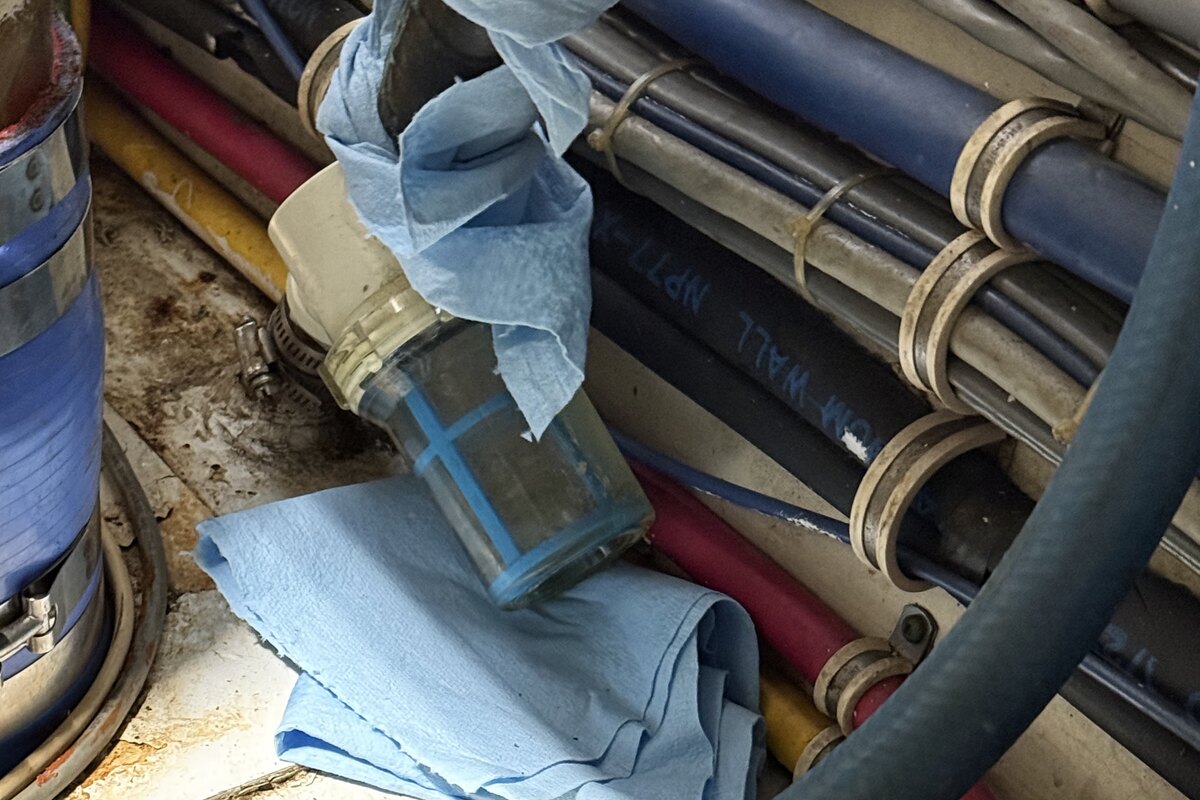
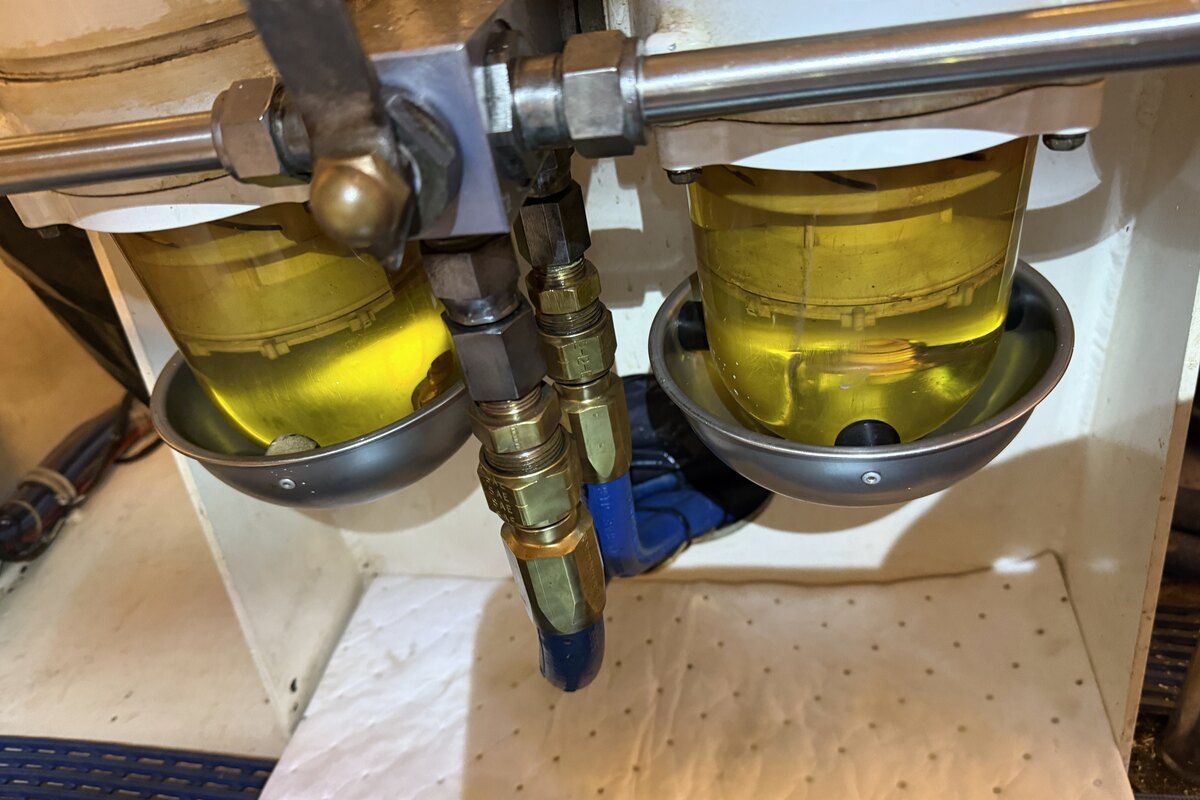
- Primary and engine-mounted fuel filters, with their seals. Check the element size and micron rating against each installation, including any filter housings replaced since the boat was built.
- Oil filters and enough of the specified oil for the servicing you’ll do away from supply, plus a reserve for topping up.
- Belts in the specified profile and length, and critical molded hoses where straight hose won’t work, with correctly sized marine-grade clamps.
Which electrical spares belong aboard?
Keep spare fuses of every type and rating used on essential circuits. Add correctly specified spare breakers where practical, and bulbs for any navigation lights you can service. Sealed LED fixtures may need a complete replacement unit. Terminals with heat-shrink insulation make wiring repairs possible.
Match the voltage and current ratings as well as the physical fit. An oversized fuse can leave wiring unprotected, and a breaker that fits the panel can still have the wrong trip characteristics.
What plumbing and head parts should you stock?
A freshwater pump service kit can fix a failed diaphragm or pressure switch when the pump is designed to be rebuilt. Where the pump is hard to reach or downtime matters, a complete spare pump can make more sense.
Carry a replacement bilge pump and float switch matched to the installation, with the connections and hose fittings ready. For heads and macerators, use the manufacturer’s model-specific service parts, such as joker valves or macerator repair kits, and check what’s in each kit against the repair you expect to make.
Which anodes, fluids and tools do you need?
Carry zincs or the other specified anodes for the equipment you service aboard, including engine and generator pencil anodes where fitted. Match both the alloy and the dimensions to the installation.
Keep the specified coolant and transmission fluid aboard, clearly labeled and securely stowed, plus hydraulic fluid if your equipment uses it. Stock the tools needed to fit your spares: the right filter wrench, an impeller puller, a multimeter and proper crimping tools.
Keep softwood plugs sized for your through-hulls in an emergency kit you can reach quickly. Repair tape and an underwater repair compound can help limit damage until a proper repair is arranged.
How do you make sure a spare actually fits?
Record the full model and serial number from each component’s nameplate, then check the manufacturer’s current part number against the installed equipment. The purchase survey and old invoices are useful starting points, but equipment may have been changed since.
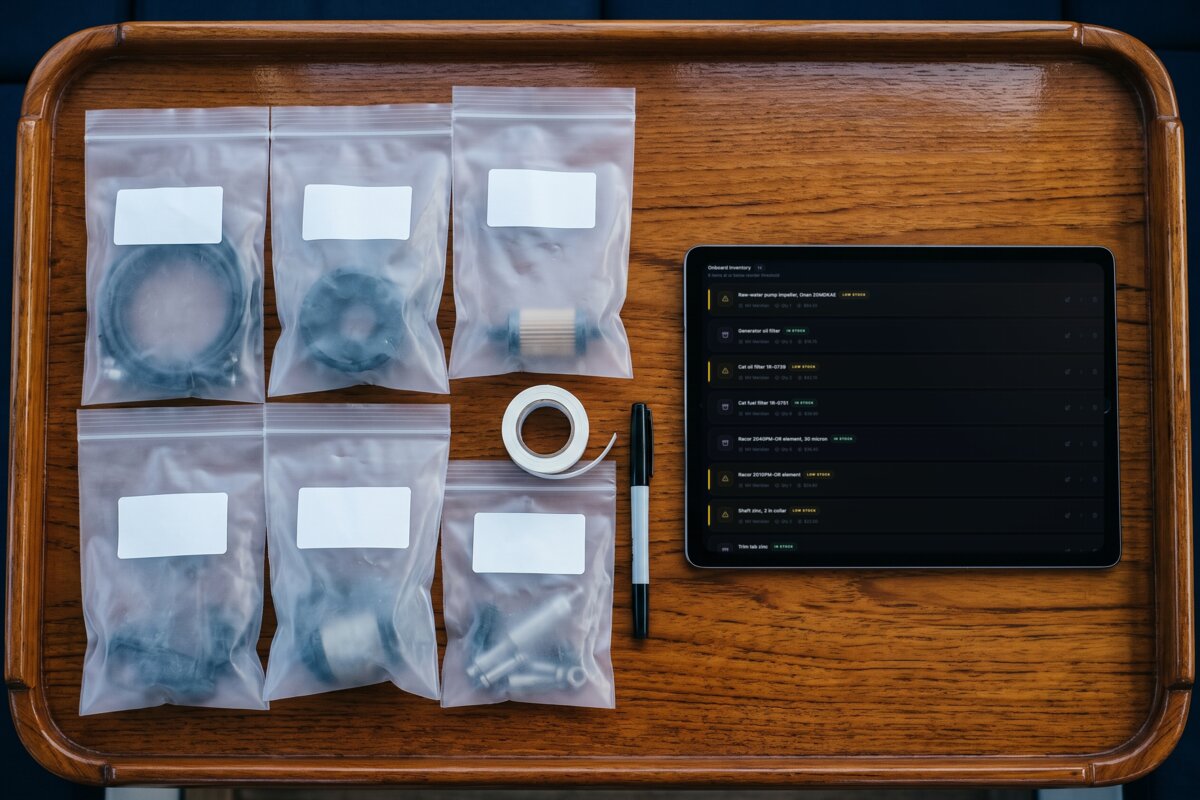
Label each spare with its part number and the component it’s for. Store vulnerable items dry and away from heat, and rotate stock according to shelf-life guidance. A sealed bag marked “port generator raw water pump” saves a search in the middle of a breakdown.
How many of each spare should you carry?
Start with the parts for scheduled work due before your next reliable resupply, then add a breakdown reserve. Two engines that use the same primary filter element need two elements for a single change each. Fuel contamination can call for several changes in a row, so remote cruising warrants more than one change set.
Lead time and the consequence of a failure decide how big that reserve should be. Set each reorder level high enough to cover what you’ll use while the replacement is in transit, and check the locker against the list before any long trip.
How do you keep the list current after a part is used?
Harbor Guardian’s parts and vendor management tracks spare parts and supplies by quantity and cost. Each item can have a preferred vendor and a low-stock flag at its reorder level, and each component’s make, model and serial number sit in the vessel record, so an order can be checked against the equipment aboard.
Say your captain uses the last primary fuel filter element. A group text may mention the change while the stock spreadsheet still shows one left. In Harbor Guardian, logging the repair and setting that part’s quantity to zero makes the shortage visible straight away. Assign someone to reorder it, and update the stock when the replacement arrives. That closes the gap between a finished repair and a boat that’s ready for the next one.
Quick answers
What spare parts should a motor yacht carry? At minimum: raw water pump impellers, fuel and oil filters, belts, hoses and clamps, fuses, bilge pump spares, anodes, the specified coolant and fluids, and the tools to fit them. Base the full list on your own equipment.
How many fuel filters should you carry? Enough for every scheduled change before your next resupply, plus a reserve. Fuel contamination can mean several changes in a row, so carry more for remote cruising.
How do you know which part number to order? Read the model and serial number from the component’s nameplate and check the manufacturer’s current part number. Don’t rely only on the purchase survey, since equipment may have been replaced.
Never open an empty spares locker again
A spares list only helps if it matches the equipment aboard and someone notices when the last part gets used. Harbor Guardian ties every spare to the right component and flags it before you run out.
Contact us and we’ll show you how spare parts and restocking would work on your boat or across your fleet.